← All case studies

Case study · National literacy charity

Off one trainer's calendar.

Coordinator training taken off one trainer's calendar, and built as a library coordinators come back to.

6–7 → 2–3Live sessions per coordinator, by design

Client
Story Dogs
Sector
Not-for-profits
What we built
A self-paced, story-led academy: 7 modules and 35 topics
The work
See it

About Story Dogs.

Story Dogs puts volunteer dog-and-handler teams into primary schools for weekly reading sessions: more than 2,800 children a week, through 561 Dog Teams in 396 schools. That reach depends on about 62 volunteer regional coordinators.

Every one of them was trained one to one by a single trainer. The academy is designed to cut that trainer's delivery time by about 80%.

More on not-for-profitsCoordinator and volunteer training · sector

01

The situation

Every new coordinator was trained by one paid Coordinator Trainer, working 20 hours a week. The trainer emailed PDF flowcharts a module at a time, then met each trainee on Zoom: about 90 minutes for the first module and 45 to 60 minutes for each after. Each trainee needed 6 to 7 sessions, five trainees at a time.

Growth was tied to one calendar. The content had no single home. And skills faded before coordinators needed them, so the only place to go was back to the trainer.
02

What we did

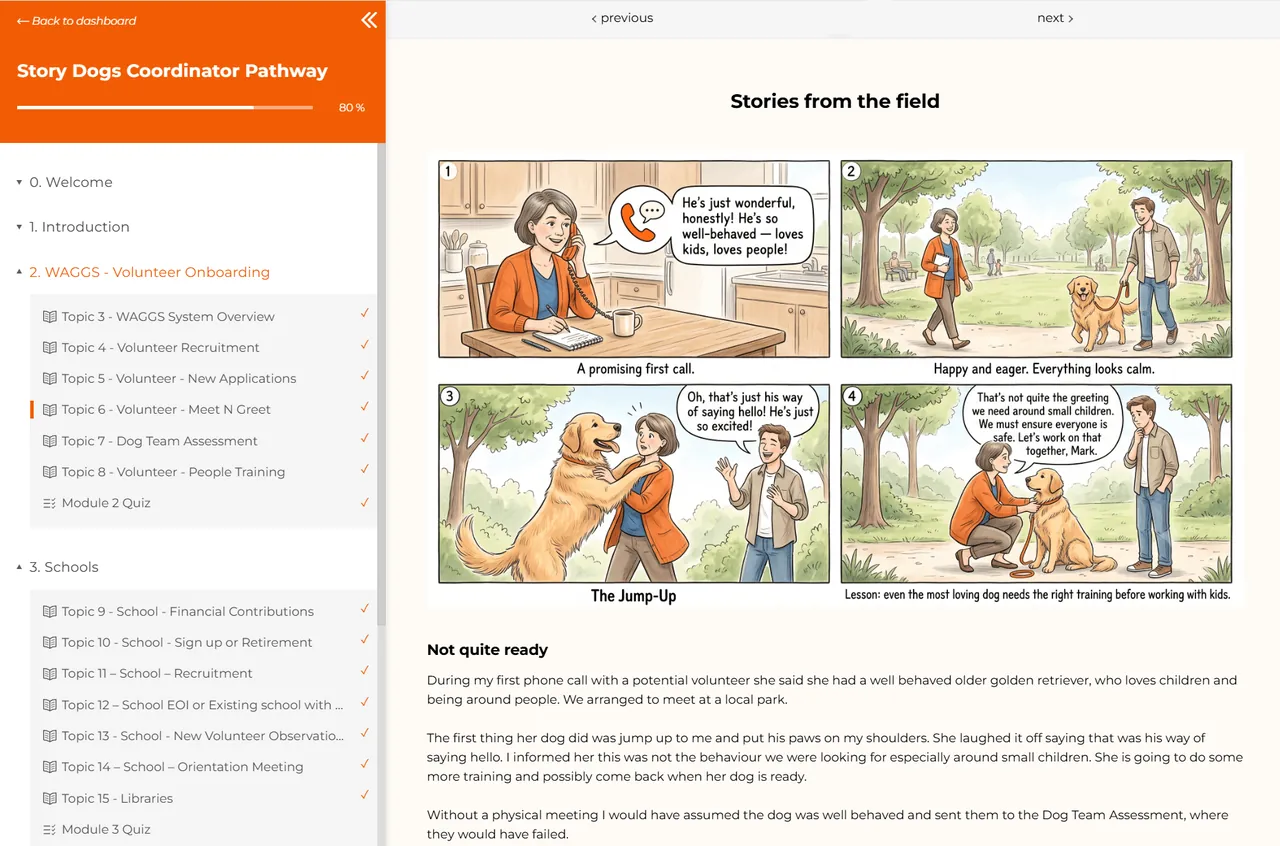
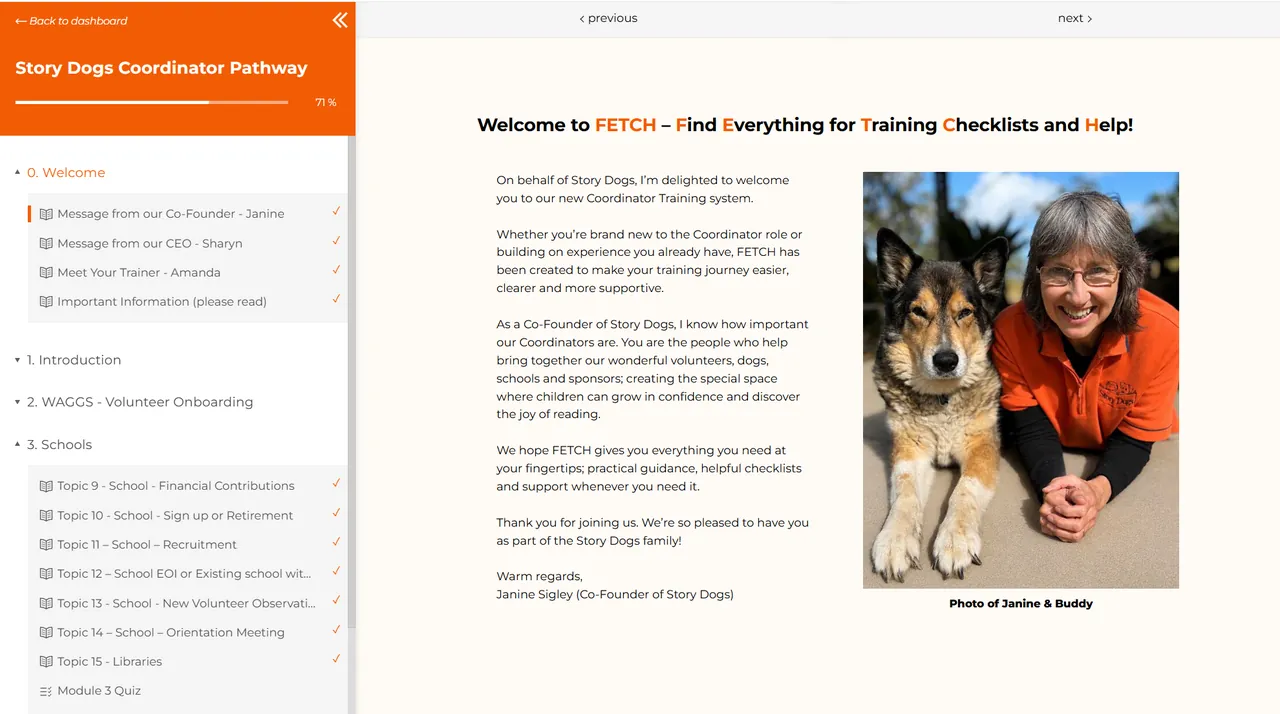
The brief was "build an online training program". The real problem was key-person risk. We designed around the people doing it, volunteers who said yes for the mission, and built a self-paced, story-led academy: 7 modules and 35 topics, each a reference a coordinator can open when they need that step. Live time shrinks to a mid-point check-in and an end-of-program debrief.

Every fact, step and resource in the source documents was kept, and gaps were checked with Story Dogs rather than invented.

6–7 → 2–3

Live sessions per coordinator, by design

03

What it's designed to deliver

  • About 80% less trainer delivery time per cohort: roughly 20 hours down to 2 or 3.
  • Live sessions cut from 6–7 to 2–3 per coordinator.
  • A permanent reference library instead of a one-off course.
  • Coordinators who can run their region without calling the trainer.
  • Results from the first cohorts to follow.

Your turn

Sound like your business?

In 30 minutes we'll give you an honest read on what's holding your program back, and what would fix it.

No obligation.